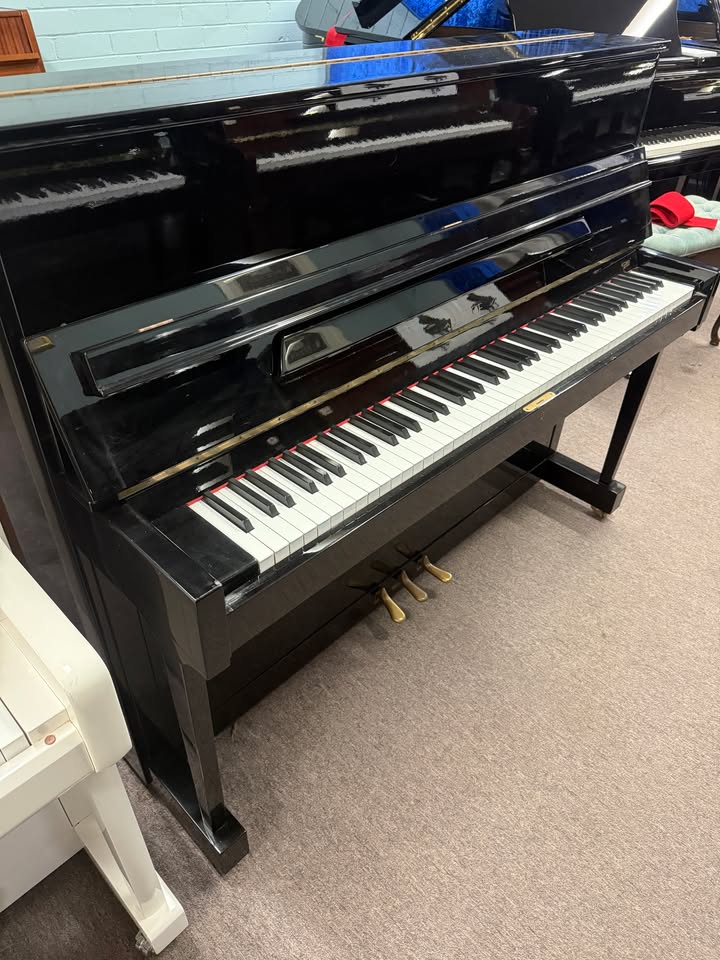
• Kawai K300 Upright Piano – 122 cm – Mahogany Polish
    -7%

    Kawai K300 Upright Piano – 122 cm – Mahogany Polish

    SKU: KAW-K300J/MP
    $11,988.00Originally $12,895.00
    Save 7% • $907.00
  • kawai k300
    -18%

    Kawai K-300 Upright Piano – Polished Ebony

    SKU: KAW-K300J/MEP
    $8,889.00Originally $10,795.00
    Save 18% • $1,906.00
  • Kawai K300 Upright Piano – White Polish – 122 cm

    Kawai K300 Upright Piano – White Polish – 122 cm

    SKU: KAW-K300IWHI
    $10,795.00
  • Kawai K500 Upright Piano – Sapele Mahogany Polish – 130 cm

    Kawai K500 Upright Piano – Sapele Mahogany Polish – 130 cm

    SKU: KAW-K500SMP
    $17,995.00
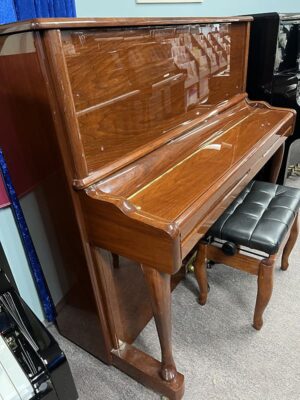
  • Petrof Prof Upright 131 E1 Walnut Used 2007 With Bench
    -8%

    Petrof Prof Upright 131 E1 Walnut Used 2007 With Bench

    SKU: PET-CON188
    $11,888.00Originally $12,888.00
    Save 8% • $1,000.00
  • Petrof Upright Piano P131E1 Walnut Used

    Petrof Upright Piano P131E1 Walnut Used

    SKU: PET-P131E1W
    $19,995.00
  • Placeholder

    Beale Up131Yh Upright Piano - Polished Ebony

    SKU: BEA-9398388
    $7,299.00
  • Petrof P131 M1 Euro Upright 0801
    -18%

    Petrof P131 M1 Euro Upright 0801

    SKU: PET-P131M10801
    $28,649.00Originally $34,995.00
    Save 18% • $6,346.00
  • Kayserburg Uh130 Upright Piano In Walnut Polish #1850063
    -15%

    Kayserburg Uh130 Upright Piano In Walnut Polish #1850063

    SKU: KAY-UH130W
    $5,888.00Originally $6,895.00
    Save 15% • $1,007.00
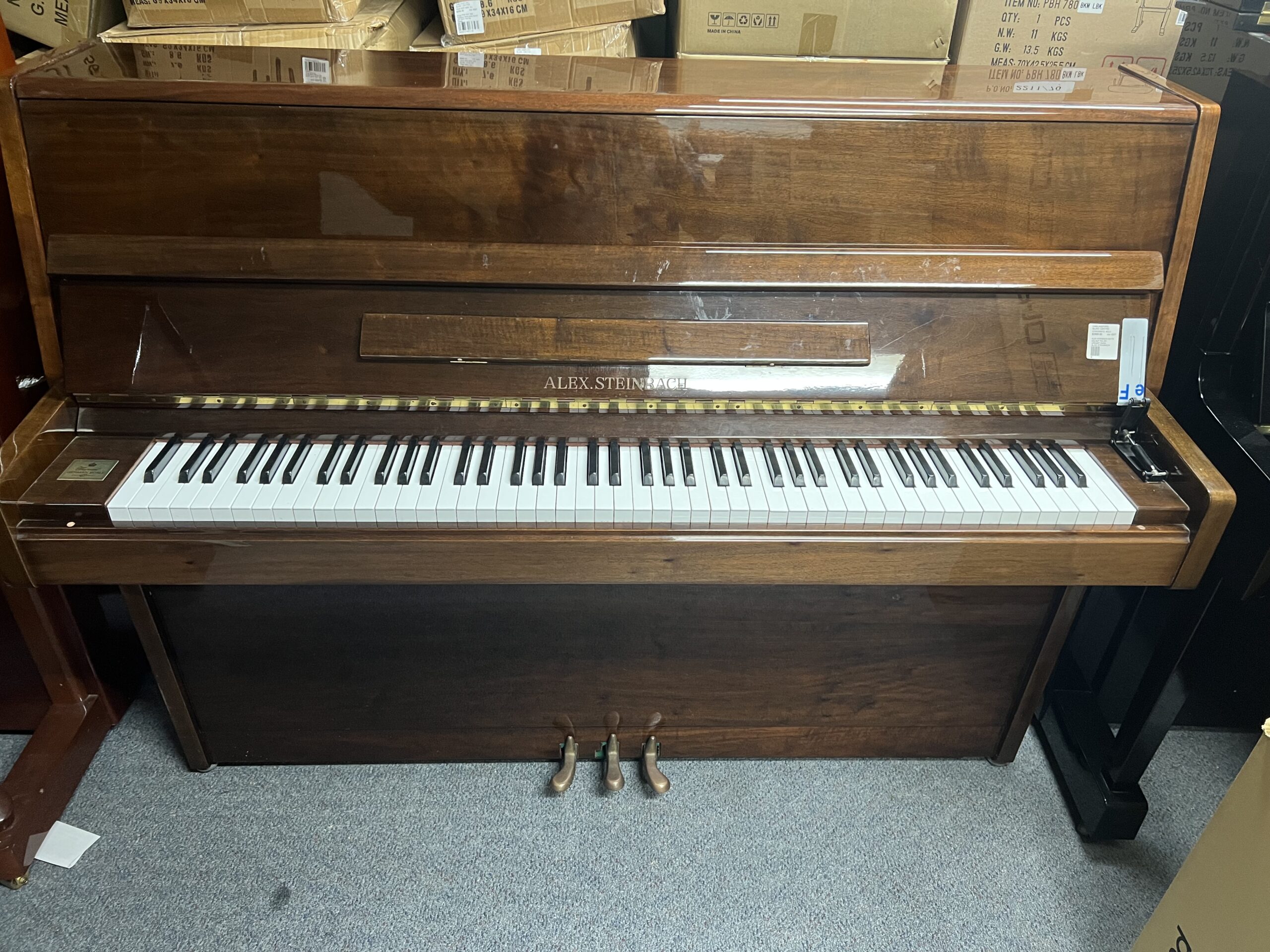
  • Alex Steinbach Su118 Walnut Polish Upright Piano #Hia02023
    -33%

    Alex Steinbach Su118 Walnut Polish Upright Piano #Hia02023

    SKU: ALE-CON294512
    $1,999.00Originally $2,995.00
    Save 33% • $996.00
  • Yamaha U10 A Upright Piano #4889774
    -25%

    Yamaha U10 A Upright Piano #4889774

    SKU: YAM-SHOP103
    $5,988.60Originally $7,998.00
    Save 25% • $2,009.40
  • Petrof P131 M1 Wal 2251 Euro Upright

    Petrof P131 M1 Wal 2251 Euro Upright

    SKU: PET-P131M12251
    $36,995.00

Discover Our Range of High-Quality Upright Pianos for Sale

The upright piano has become the world’s most recognised musical instrument. It was invented in Italy by Bartolomeo Cristofori in the 1700s, as the exact year is uncertain.

A Piano works by strings struck by hammers and is played using a keyboard. The term piano is a shortened word of pianoforte, an Italian term for the early 1700s versions of the instrument.

The musical terms piano and forte indicate “soft” and “loud” respectively, referring to the variations in dynamic (i.e., loudness) produced in response to a pianist’s touch or pressure on the keys.

The first piano in the 1700s had a quieter sound and smaller dynamic range.

An acoustic piano has two variations: the upright piano (which has strings stretched horizontally) and the grand piano (which has strings pulled vertically). An upright piano has a protective wooden case surrounding the soundboard and metal strings, which strung under high tension on a heavy metal frame.

At Carlingford Music Centre we keep an extensive range of both Grand Pianos and upright pianos in our specialty showroom located in Carlingford. Our best-selling Upright Piano The Kawai K300, uses a solid spruce soundboard which gives one of the fullest sounds available in an upright piano available. Moreover, the Kawai Custom millennium III actions give any upright piano, from beginner to seasons professional a quick and responsive.

What is an upright piano?

The upright piano is a musical instrument in which the soundboard and plane of the strings run vertically, perpendicular to the keyboard, thus taking up less floor space than the normal grand piano. Upright pianos are made in various heights; the shortest is called spinets or consoles, and these are generally considered to have an inferior tone resulting from the shortness of their strings and their relatively small soundboards. The larger upright pianos were quite popular in the later 19th and early 20th centuries. The action (hammer and damper mechanism) of the upright differs from the grand-piano action mainly in that upright action is returned to a resting position by means of springs rather than by gravity alone, as in a grand. This, in part, accounts for the characteristic “touch” of uprights, which is distinct from that of grands. The chief advantages of upright pianos lie in their modest price and compactness; they are instruments for the home and school, not for the concert stage.

What is the best upright piano?

The 48” Kawai K300 is our best-selling Kawai upright piano. The height is ideal and the delightful tone projected by the tapered spruce soundboard is capable of producing a wide range of sounds. From sweet, soft pianissimos to reverberating fortissimos, the K300 will surpass your expectations. The K300 is also equipped with Kawai’s revolutionary Millennium III upright action. The Millennium III action, designed with components made from carbon composite materials, provides extraordinary musical expression and extremely responsive touch.

What is the difference between a console and upright piano?

The spinet piano is the smallest of the vertical pianos. Being very short in stature, there is a lot of compromises in the piano’s acoustics. The spinet piano has what is known as a dropped action. The piano action is the part of the piano that transfers the energy of striking the key to the hammer which then strikes the string. In appearance, the spinet and console pianos are very similar. Some piano technicians charge more money to work on spinets because they consider them more challenging to repair. There are many more working parts in a spinet piano than a console but a qualified piano tech should be able to service a spinet piano at no extra charge.

The console is the most common of the vertical pianos. The action of a console piano lies directly on top of the keys and is known as direct blow action. Once the hammer strikes the string and the key is released a spring then pulls the hammer back to its initial position, ready to strike the string again. This size piano is more desirable over a spinet, not only for its size (more soundboard) but also because the direct blow action is more efficient and responsive to the player’s touch. The cases of console pianos are often very desirable from a furniture style perspective.